If you are planning to buy in the Greater Toronto Area (GTA), one question can shape almost every part of your search: should you buy a condo or stretch your budget for a freehold home?
That question is particularly relevant in the GTA housing market in 2026. Condo prices underwent a significant correction earlier in the year, while townhouses, semi-detached homes, and detached properties have also become more affordable than at previous market highs. As of July 2026, a GTA condo apartment was selling for roughly $636,000 on average, compared with about $904,000 for a freehold townhouse and approximately $1.29 million for a detached home.
The result is a more nuanced choice between a condo and a freehold home in the GTA than we have seen in recent years. A condo still offers the lower entry price, but softer freehold pricing may put additional space within reach for some households.
So, should you buy a condo or a house in the GTA? There is no universal answer. Your budget, lifestyle, expected length of ownership, and plans for the property all matter. Here is how the two options compare in today’s market.
Where Prices Stand Right Now: Condo vs. Freehold
According to July 2026 market data from the Toronto Regional Real Estate Board (TRREB), the overall GTA average selling price was $1,003,956, down 4.5% from July 2025. New listings were also down 17.8% year over year, suggesting that conditions were beginning to tighten as summer progressed.
Approximate GTA averages in July looked like this:
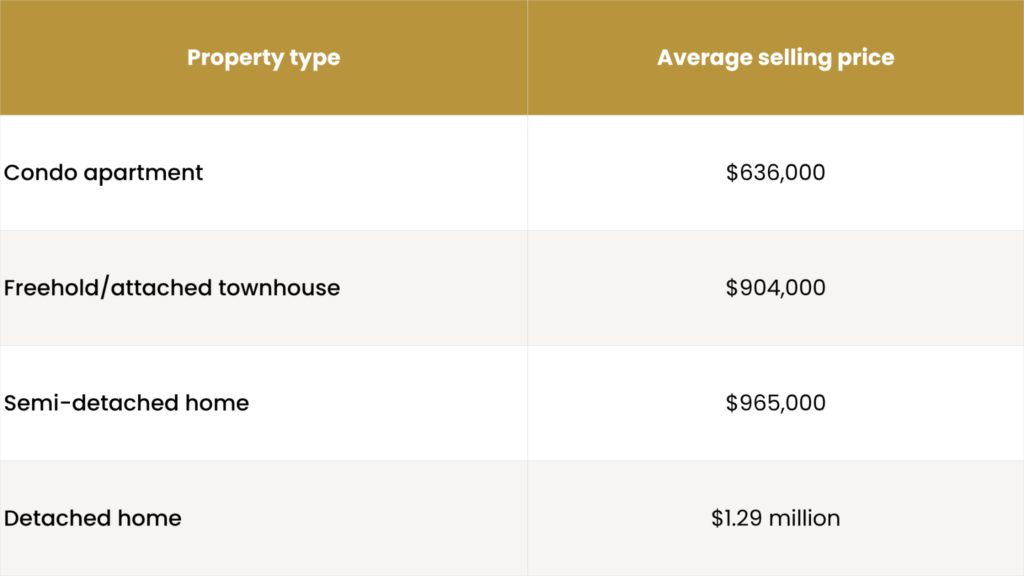
For anyone tracking GTA condo prices in 2026, the first quarter highlighted the extent of the market correction. TRREB reported an average condo apartment price of $618,484 during the first quarter, down 9.1% year over year. Active listings remained elevated, giving purchasers considerable choice and negotiating power.
By summer, however, broader GTA conditions were tightening. That means the buying opportunity available earlier in the year may not remain equally favourable across every neighbourhood.
Location also matters. A condo or house in Toronto in 2026 can produce a very different price comparison from the same search in Durham, Peel, or York Region. Downtown Toronto has a much larger concentration of condo apartments, while many 905 communities provide a wider selection of freehold townhouses and detached homes.
The Case for Buying a Condo Right Now
For a first-time buyer choosing between a condo or house in the GTA, a condo remains one of the most accessible ways to enter the ownership market.
The lower purchase price can reduce the amount you need for your down payment and make monthly mortgage costs easier to manage. In a condo market with elevated inventory, you may also have more opportunity to compare units, negotiate price, and carefully review conditions instead of feeling pressured to make an immediate decision.
A condo may be particularly appealing if you value:
- A location close to public transit, employment centers, and urban amenities
- Less responsibility for exterior maintenance
- A lower purchase price than most comparable freehold properties
- Building amenities that fit your lifestyle
- The ability to enter the market without immediately buying more space than you need
That convenience comes with an important trade-off: monthly common expenses.
When considering condo maintenance fees in Ontario, look beyond the current monthly amount. The Condominium Authority of Ontario (CAO) explains that these fees support common-element maintenance, building operations, and reserve fund contributions. Fees can change as a condominium corporation’s expenses change, and special assessments may sometimes be required.
A condo can therefore be an attractive purchase today, particularly if you plan to hold it for several years, but building quality, management, reserve funding, and future fee obligations should be evaluated carefully.
The Case for Buying Freehold Right Now
The main advantage of freehold ownership is straightforward: you generally gain more control, more space and, depending on the property, ownership of the land beneath your home.
A freehold townhouse or semi-detached home can be especially attractive if you expect your household needs to change. An extra bedroom, basement, backyard, or additional storage may reduce the likelihood that you need to move again within a few years.
The price of a freehold townhouse in the GTA, at roughly $904,000 in July, also makes this property type an important middle ground between a condo apartment and a detached home.
Freehold ownership usually means:
- No monthly condominium maintenance fee
- More control over renovations and exterior improvements, subject to local rules
- More indoor and outdoor space
- Responsibility for your own repairs, maintenance, and replacement costs
That final point matters. Not paying condo fees does not mean maintenance is free. A roof replacement, furnace failure, drainage problem, or other major repair can create a substantial one-time expense.
Freehold supply may also become more competitive. TRREB reported that GTA new listings across all housing types fell substantially year over year in July, so buyers considering a freehold property should not assume today’s negotiating conditions will remain unchanged throughout the rest of 2026.
Carrying Costs: The Number Buyers Often Underestimate
Comparing freeholds and condos in Ontario should never be based on purchase price alone.
For a condo, your monthly housing budget may include:
- Mortgage payment
- Property taxes
- Condo fees
- Unit insurance
- Utilities not included in the condo fee
- Parking or other separately charged expenses
For a freehold home, you may need to budget for:
- Mortgage payment
- Property taxes
- Home insurance
- Utilities
- Routine upkeep
- A reserve for major repairs and replacements
Canada Mortgage and Housing Corporation (CMHC) similarly recommends considering recurring costs such as mortgage payments, property taxes, insurance, utilities, and condominium common expenses when determining whether a property fits your budget.
The practical takeaway is simple: compare the true monthly and long-term cost of ownership rather than choosing between two properties based only on their listing prices.
Which Property Type Fits Your Situation?
Your priorities can make one option more suitable than the other.
- If you are buying your first home on a tighter budget, a condo may provide a more realistic entry point, particularly while you still have meaningful choice in the resale market.
- If you need more space and expect to stay for many years, a freehold townhouse or semi-detached home may justify the higher initial cost.
- If you are downsizing or prioritizing convenience, a well-managed condo can reduce the amount of property maintenance you need to handle personally.
- If you are buying an investment property, run the numbers carefully. When comparing condos and houses as investments in Toronto, the purchase price is only one consideration.
TRREB reported that condo apartment rents remained below year-earlier levels during the first quarter of 2026 while rental listings increased, so rising condo fees and softer rents can affect cash flow.
Whatever you choose, a longer ownership horizon generally gives you more time to absorb transaction costs and short-term fluctuations in market value.
What Could Change the Condo vs. Freehold Calculation?
Today’s market conditions will not necessarily last.
The new-home construction pipeline is one factor to watch. CMHC has noted that Toronto has seen weaker ownership-oriented construction, including a slowdown in condo starts, and that fewer projects starting today could contribute to tighter housing supply later. In July 2026, Toronto housing starts were down 10% year over year because of lower multi-unit construction.
That matters because today’s relatively well-supplied condo market may look different several years from now if fewer new units reach completion.
Tax incentives can also affect the economics of new construction. The Canada Revenue Agency (CRA) now provides information on the temporary Ontario Enhanced New Housing Rebate, which applies to eligible new or substantially renovated homes under specific conditions and timelines. Agreements with builders generally need to be entered into between April 1, 2026 and March 31, 2027.
Eligible first-time buyers may also qualify for the federal First-Time Home Buyers’ Goods and Services Tax/Harmonized Sales Tax (GST/HST) Rebate on qualifying new homes.
If you are comparing a new-build condo with a new freehold home, these programs can materially affect your final numbers, so eligibility should be confirmed before you make a purchase decision.
Condo or Freehold: Which Is the Better Buy?
In today’s GTA market, condos offer the lower entry price and, in many areas, greater choice. Freehold homes give you more space, control, and land ownership but require a considerably larger budget and greater responsibility for maintenance.
Neither is automatically the better investment. The stronger choice is the property that works with your finances, lifestyle, and expected timeline. Before deciding, compare your down payment, mortgage payment, taxes, fees, utilities, and future maintenance costs side by side.
At Big City Realty, we help you compare condo and freehold opportunities using current neighbourhood pricing and market conditions so you can focus on the property type that genuinely fits your goals.
Frequently Asked Questions
1. Is it cheaper to buy a condo or a freehold home in the GTA in 2026?
Generally, yes. Condo apartments remain substantially less expensive than freehold townhouses, semi-detached homes, and detached properties on a GTA-wide average basis. However, location and property size matter. A larger downtown condo can cost more than some freehold properties in outer GTA municipalities.
2. Are condo prices expected to keep falling in the GTA?
There is no certainty that condo prices will continue falling. Condo prices experienced a significant year-over-year correction in early 2026, but TRREB has since reported tightening overall market conditions as new listings declined. Future pricing will depend on inventory, mortgage rates, employment conditions, and buyer demand.
3. What are typical condo maintenance fees in Toronto?
There is no single standard maintenance fee. Your payment depends on the condominium corporation’s budget, your unit’s allocated share of common expenses, building amenities, services, insurance requirements, and reserve fund needs. Compare fees between similar buildings and review what is included rather than judging a unit by the monthly amount alone.
4. Is a freehold townhouse a good alternative to a detached house?
It can be. If you want more living space and greater control than a typical condo provides but cannot comfortably carry the cost of a detached home, a freehold townhouse can offer a useful middle ground. You should still account for your own exterior maintenance and repair costs.
5. Is now a good time to buy a condo as an investment in the GTA?
It can be, but property selection and your holding period matter. Softer pricing may create opportunities to purchase below recent market levels, while elevated inventory can give you negotiating leverage. At the same time, softer rents and increasing condo fees can pressure short-term returns. Calculate realistic rent, expenses, and financing costs before deciding whether the investment works for you.