Pre-construction condos are one of the most talked-about entry points into Ontario’s real estate market, especially across the GTA, where buyers are often looking for newer buildings, modern layouts, flexible deposits, and earlier access to future inventory.
The appeal is clear: you can secure a unit before it is built, often with more time to save for closing and more choice around layouts, floors, and finishes. But buying a pre-construction condo in Ontario is very different from buying a resale home. The process is longer, the documents are more complex, the deposit schedule is different, and the final cost is not always limited to the purchase price.
In 2026, pre-construction condos in Ontario are also getting more attention because of new HST relief rules for qualifying new homes purchased during a specific window. Ontario’s enhanced rebate rules generally apply to eligible new homes purchased from a builder under agreements signed from April 1, 2026 to March 31, 2027, with additional timing rules for construction and completion.
Here is a clear step-by-step look at how pre-construction condos work in Ontario, from the first sales phase to final closing.
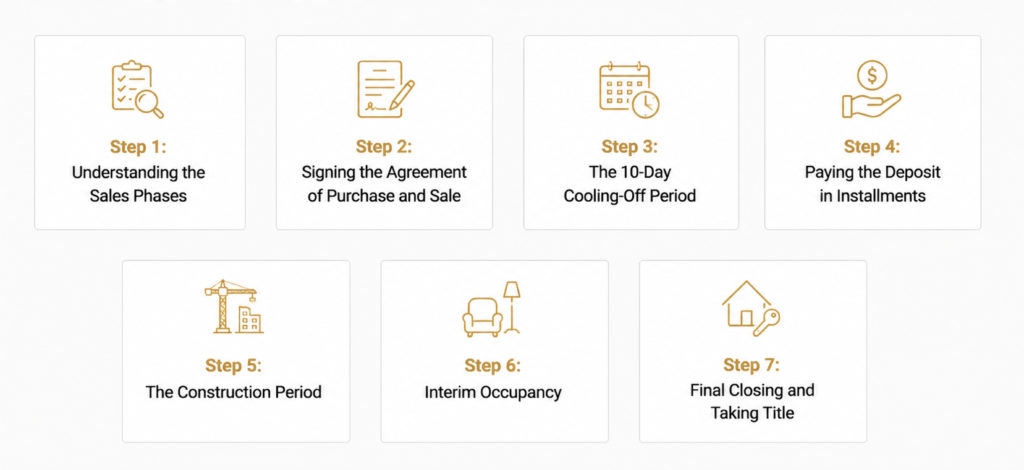
Step 1: Understanding the Sales Phases
Most pre-construction condo projects in Ontario are released in stages before the general public can buy.
- The first stage is usually the platinum or VIP phase. This is when select real estate brokers and their clients get early access to units. Buyers may get better selection, earlier pricing, and access to desirable layouts before they are widely available.
- Next comes the agent or realtor phase, where the project opens to a broader group of real estate professionals and their buyers.
- The final stage is the public launch, when anyone who registered can view remaining inventory. By this point, many preferred units, floor plans, and price points may already be sold.
This is why working with a real estate agent who has platinum access can make a real difference. For buyers exploring pre-construction condos in the GTA in 2026, early access can mean better selection, better pricing, and a clearer understanding of which projects are worth considering.
Step 2: Signing the Agreement of Purchase and Sale
Once you settle on a specific floor plan and view, you will sit down to sign the Agreement of Purchase and Sale (APS). Unlike a standard resale offer, a pre-construction APS is an incredibly dense legal contract that frequently spans 50 to 100+ pages of developer-focused legal protections.
When entering into this agreement, there are three high-stakes areas you must explicitly review:
Permitted Structural Amendments
The APS explicitly permits the builder to make minor structural changes to the building design, material finishes, layout orientations, or overall square footage within predetermined regulatory limits. Your corner bedroom might shift slightly, or a specific kitchen material may be substituted if supply issues arise.
Closing Cost Adjustments
The sticker price you agree to when signing is not the final amount you pay. The APS includes provisions for builder adjustments, including municipal development levies, educational levies, green energy initiatives, and utility hook-up fees. Uncapped development levies can easily add $20,000 to $50,000+ to your final bill if they aren’t managed proactively during the negotiation phase.
Estimated Occupancy Dates
The contract will outline an estimated date for when the unit will be physically liveable. However, this is always subject to structural adjustments and conditional extensions due to labour shortages, material supply lines, or municipal permitting delays.
Because of the heavy legal weight inside this contract, you should always make your purchase conditional upon a formal legal review.
Step 3: The 10-Day Cooling-Off Period
Ontario gives pre-construction condo buyers a 10-day cooling-off period. During this time, buyers can rescind the agreement and cancel the purchase. The period begins after the buyer receives required documents, including the disclosure statement and Ontario’s Residential Condominium Buyers’ Guide.
This is the most important review window in the entire process.
Use these 10 days to:
- review the APS with a lawyer
- confirm the deposit structure
- understand closing costs
- review mortgage affordability
- compare the project to resale options
- decide whether the purchase still makes sense
During this window, the buyer can cancel without needing to give a reason. Once the 10-day period expires, the buyer is legally committed to the purchase.
Step 4: Paying the Deposit in Installments
The pre-construction condo deposit structure in Ontario is different from a resale purchase.
With a resale home, buyers usually provide one deposit shortly after the offer is accepted. With pre-construction, deposits are usually paid in stages over time.
A common GTA deposit structure may look like this:
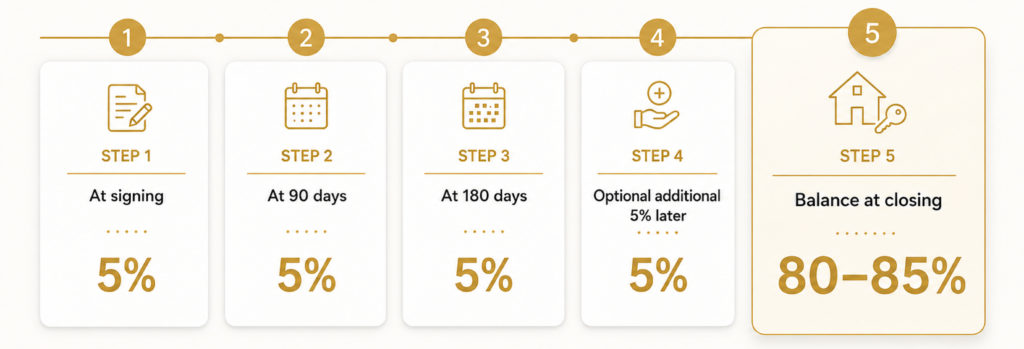
Many projects require total deposits of around 15% to 20% of the purchase price, although every builder and project is different.
Buyers should not only plan for the first payment. They need to know every installment date and make sure funds will be available on time.
For condo units, deposits are generally protected through trust requirements under the Condominium Act. Tarion also notes that if a condo deposit was not placed in trust or is not returned by the builder, Tarion provides deposit protection up to $20,000.
Step 5: The Construction Period
After the APS is signed and deposits are paid, the waiting period begins. Pre-construction condo projects can take years to complete, often depending on approvals, construction timelines, market conditions, labour, materials, financing, and project size.
Delays are one of the most common pre-construction condo risks Ontario buyers should understand.
During construction, buyers should monitor every update from the builder. Occupancy dates may change, and the builder must follow the rules set out in the APS and Tarion addendum. Tarion states that every builder of a new condominium in Ontario must provide a delayed occupancy warranty when the purchase agreement is signed.
Buyers should also remember that mortgage approval is not finalized at signing. In most cases, you need to qualify for your mortgage closer to final closing. If interest rates, income, employment, debt, or lending rules change, your financing picture may change too.
Step 6: Interim Occupancy
Interim occupancy is one of the biggest differences between pre-construction vs. resale in Ontario.
With resale, you close and become the owner right away. With a pre-construction condo, you may be allowed to move into the unit before the condominium corporation is officially registered.
During interim occupancy, you can live in the unit, but you do not yet legally own it. You do not start regular mortgage payments yet. Rather, you pay an interim occupancy fee to the constructor.
The Condominium Authority of Ontario explains that interim occupancy fees cannot be more than the total of monthly interest on the unpaid balance, estimated municipal taxes, and projected common expenses.
Interim occupancy can last a few months, but in some projects it may last longer. Buyers should budget for this period because the payments do not reduce the purchase price.
Step 7: Final Closing and Taking Title
Final closing happens once the condominium corporation is registered and legal title transfers to the buyer.
At this stage, your mortgage is activated, your lawyer completes the transfer, and you officially become the owner of the unit. Interim occupancy fees stop, and regular mortgage payments begin.
This is also when many pre-construction condo closing costs in Ontario become due, including:
- land transfer tax
- Toronto municipal land transfer tax, if applicable
- legal fees
- title insurance
- utility connection fees
- development and education levies
- builder adjustments
- remaining deposit or balance due
Buyers should budget carefully. Depending on the APS and the project, closing costs can reach tens of thousands of dollars beyond the purchase price. A lawyer should review which adjustments are capped, which are uncapped, and what the buyer should expect before signing.
Tarion Warranty: Buyer Protections in Ontario
Tarion warranty coverage is an important part of buying a new condo in Ontario.
Tarion provides warranty coverage after possession, including one-year, two-year, and seven-year coverage for different types of defects and issues. Tarion describes this as 1, 2, and 7-year coverage for freehold homes, contract homes, condo units, and condo conversions.
Buyers should also confirm that the builder is properly registered and that the home is enrolled before moving forward. Tarion’s role is not a replacement for legal advice, but it is an important layer of buyer protection in Ontario’s new home system.
The Expanded HST Relief: Why This Year Matters
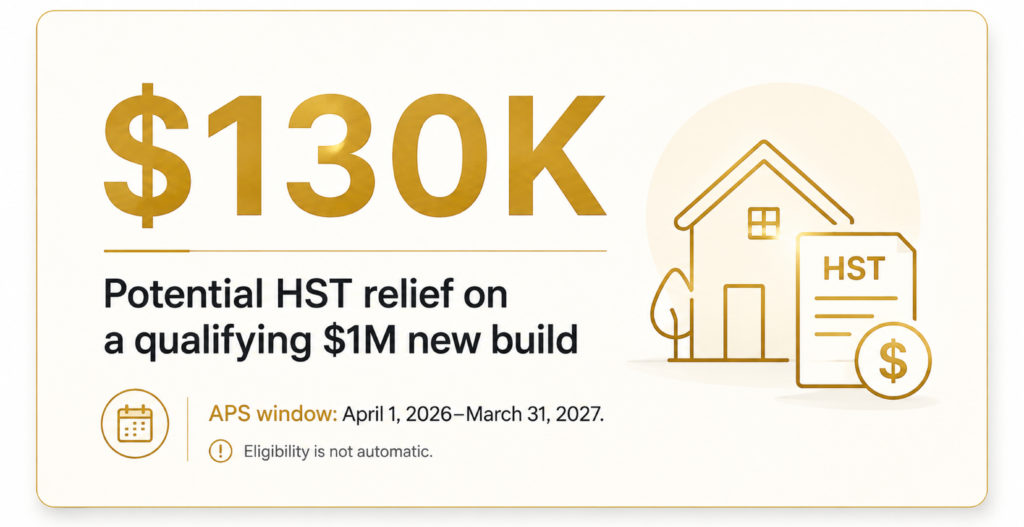
For buyers comparing pre-construction condos in Ontario in 2026, the expanded HST relief may make this year a more attractive time to purchase. Eligible new homes and pre-construction condos with an APS signed between April 1, 2026 and March 31, 2027 may qualify for up to $130,000 in combined federal and provincial HST relief. The full rebate may apply to qualifying homes up to $1 million, with the maximum rebate continuing for homes between $1 million and $1.5 million, then gradually reducing for higher-priced properties.
This relief may apply to eligible primary residences and some qualifying long-term rental properties, but it is not automatic. Buyers should confirm the APS date, property value, intended use, and builder construction timeline before relying on the rebate. A real estate agent, lawyer, and accountant can help confirm whether a specific pre-construction purchase qualifies.
Key Risks to Understand Before Buying Pre-Construction
Pre-construction can be a strong option, but it is not risk-free.
The main risks include delays, builder changes, financing risk, market value changes, and closing cost surprises.
If the market softens during construction, the unit may be worth less at closing than the original purchase price. If rates rise or your income changes, mortgage qualification may become harder. If levies are not capped in the APS, closing costs may be higher than expected.
This is why the right team matters. An experienced real estate agent can help compare projects, review pricing, explain deposit timing, and identify red flags before you sign.
Big City Realty works with pre-construction buyers across the GTA, including Toronto, Markham, Mississauga, Vaughan, and beyond. With access to new developments and a strong understanding of the Ontario market, Big City Realty can help buyers compare opportunities, understand the process, and make informed decisions before signing.
Contact Us
FAQs
- How long does the pre-construction condo process take in Ontario?
The full process can take several years. Buyers first sign the APS, pay deposits over time, wait through the construction period, enter interim occupancy, and then complete final closing once the condo corporation is registered.
- What is the required deposit amount for an Ontario pre-construction condo?
Many Ontario pre-construction condo projects require total deposits of around 15% to 20% of the purchase price, paid in installments. The exact schedule depends on the builder and project.
- What is Ontario’s 10-day cooling-off period for pre-construction condos?
It is the period after receiving the required documents when a buyer can cancel the APS. Buyers should use this time to review the agreement with a lawyer and confirm the purchase decision.
- What closing costs should I budget for a pre-construction condo in Ontario?
Buyers should budget for land transfer tax, legal fees, title insurance, builder adjustments, utility connection fees, and development or education levies. These costs can add tens of thousands of dollars beyond the purchase price.
- Is the 2026 HST relief available on pre-construction condos in Ontario?
It may be available for qualifying new construction purchases that meet the program rules. Eligibility depends on the buyer, property type, purchase date, value, and construction timelines, so buyers should confirm before relying on the rebate.