A polished lobby and a lower listing price both make strong first impressions. Neither tells you which condo is the better purchase. A newer building can come with rising fees and little track record, and a cheaper older suite can hide a reserve fund that’s falling behind. When you weigh an older condo versus a new condo, the useful comparison is total cost, building health and how the space works for your daily life.
The Short Answer: Neither age group is automatically the better buy. An older condo can offer more usable space and an established maintenance history. A newer condo can offer newer systems, modern finishes and possibly some remaining warranty coverage. The real value depends on the individual building, the unit, its location and the price you pay.
What Counts as an Older Condo or a New Condo?
There’s no legal or industry cut-off for when a condo becomes “older.” In practice, buyers often think of buildings from the 1970s to 1990s as older and those completed in roughly the last ten years as newer, but those are rough examples, not definitions. A fully renovated suite can still sit in an older building, with older elevators, windows and plumbing behind the new finishes.
It also helps to separate three different situations:
- A unit in an established older building, bought from its current owner.
- A completed condo in a newer building, bought from its owner or, in some cases, directly from the builder.
- A pre-construction condo, bought before the building is finished.
That’s why the new condo vs resale condo question can be misleading. Resale describes the transaction, not the age of the building: a two-year-old suite sold by its first owner is a resale too. Building age and purchase route are separate choices, and the trade-offs of the second one are laid out in our look at pre-construction versus resale properties.
Older Condo vs. New Condo: Key Differences
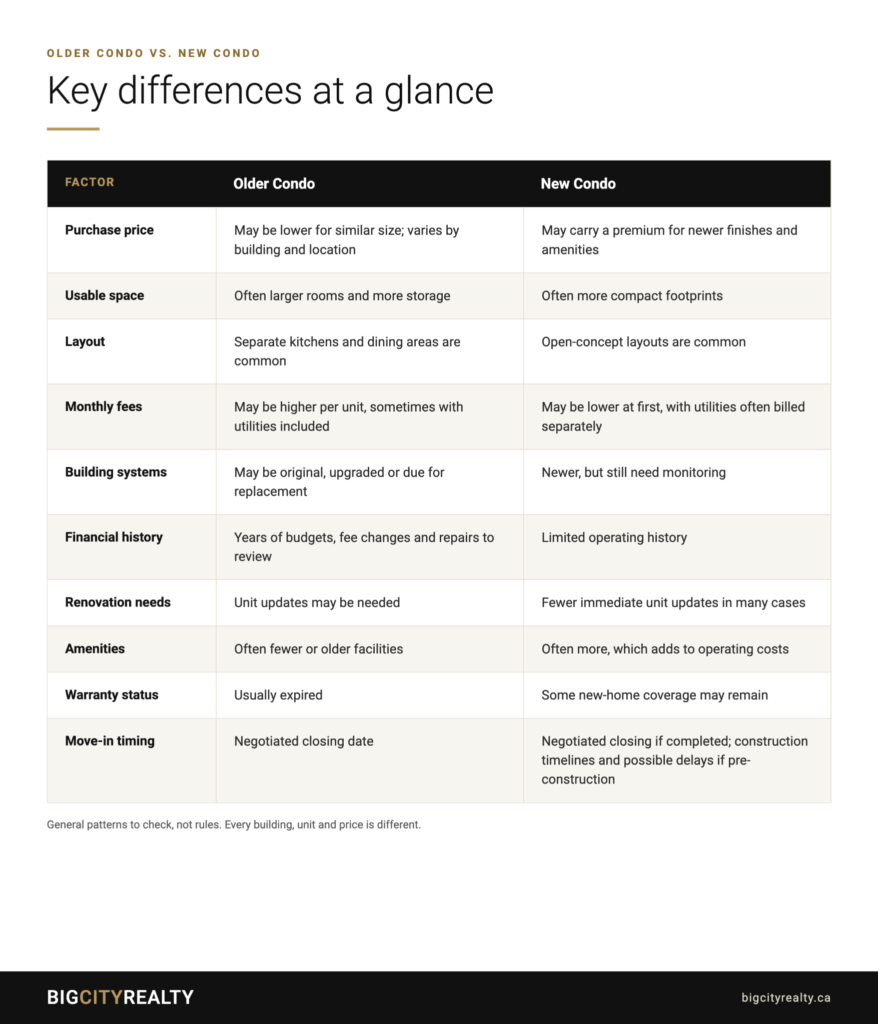
The table below compares the two in general terms. Every building is different, so treat these as patterns to check, not rules.
Purchase Price, Space and Overall Value

Compare Price per Square Foot and Usable Layout
Are older condos cheaper than new condos? Often on a per-square-foot basis, though not always on the sticker price. Some older units offer larger rooms, a separate kitchen and more closet space, while some newer units focus on open layouts and compact footprints.
A simple hypothetical example shows why the headline price isn’t enough:
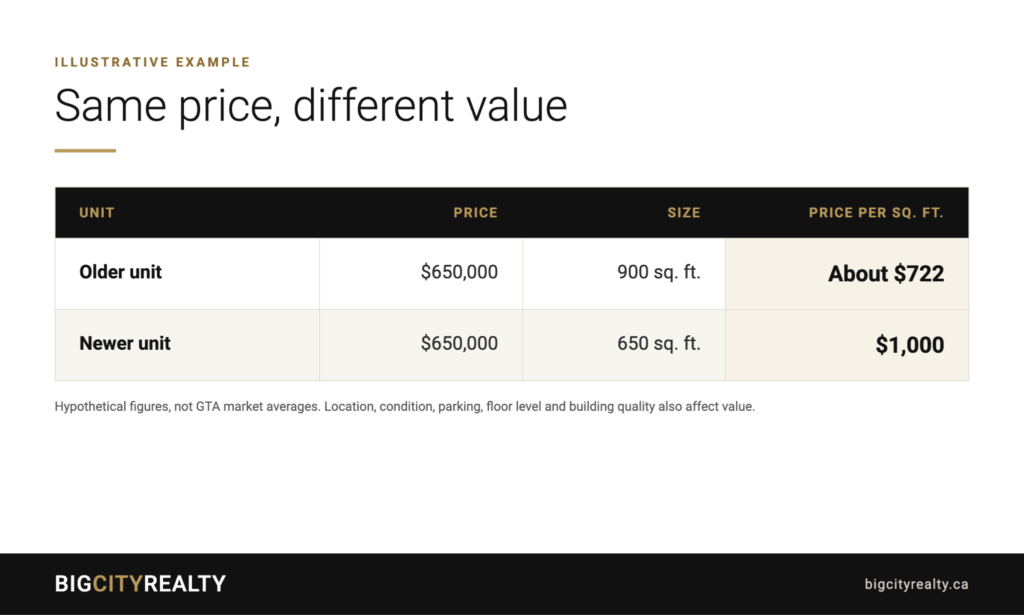
These are illustrative figures, not GTA market averages. Location, condition, parking, floor level and building quality all affect value, so a lower price per square foot only matters if the space actually works for you. Compare real floor plans, room dimensions, natural light, balcony access and where your furniture will go.
Include Renovations and Closing Costs
When buying an older condo in the GTA, add the cost of any updates you’ll want, such as a new kitchen, bathroom, flooring or appliances, and compare that with the premium you’d pay for newer finishes elsewhere. Keep work inside your unit separate from common-element repairs, which the condo corporation funds through fees, the reserve fund or special assessments.
Pre-construction purchases bring their own set of costs: deposits paid over time, upgrades, builder closing adjustments and an interim occupancy period before final closing. Understanding how pre-construction condos work in Ontario makes it easier to put those costs next to a completed condo’s price. A staged deposit schedule spreads out payments, but it doesn’t lower the total cost, and new condos don’t automatically come with lower closing costs.
Condo Fees and the True Monthly Budget

Check What the Monthly Fee Includes
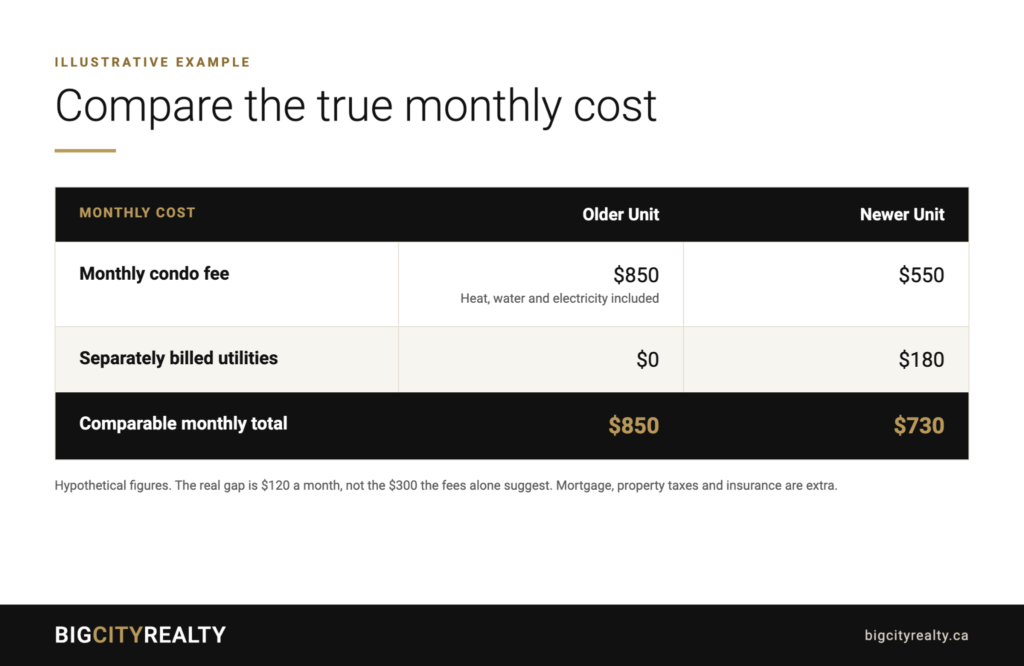
Older condo maintenance fees often look high at first glance, but the number on its own can mislead. Fees reflect the unit’s size, the services and utilities included, staffing, amenities, insurance, operating costs and contributions to the reserve fund. Compare both the total monthly amount and the fee per square foot, and make sure you’re comparing similar inclusions.
Here’s a hypothetical comparison:
The real gap is $120 a month, not the $300 the fees alone suggest. Your full budget also needs the mortgage payment, property taxes and home insurance.
Look Beyond Today’s Fee
Ask for the history of fee increases, the current budget and planned reserve contributions. An older building may be heading into major replacements. A newer one can see adjustments once actual operating costs become clear after the first few years. A low fee isn’t proof that a building is well funded.
This is also where your lender’s numbers and your real-life budget need to meet. A borrowing estimate tells you what a lender may approve, not what you’re comfortable paying each month once fees and utilities are added. Knowing the difference between mortgage pre-approval versus pre-qualification helps you see how firm that estimate is before you set a price range.
Reserve Funds, Repairs and Building Management

Older Buildings: Check Completed Work and What Comes Next
If you’re wondering what to check before buying an older condo, start with the big-ticket components: windows, roof, elevators, plumbing, heating and cooling, balconies and the underground garage. Find out which have already been replaced, which are coming up and how the work will be paid for.
A well-run older building that has kept its reserve fund on track can compare well against a newer one. Deferred repairs, repeated funding shortfalls or a history of special assessments deserve a much closer look.
Newer Buildings: Check Defects and Early Financial Planning
New construction isn’t immune to problems. Deficiencies, water leaks and mechanical issues can surface in the first few years. Review whatever records the corporation has, including its reserve planning, management arrangements and any outstanding common-element issues. With less operating history, some future costs are simply harder to judge.
What to Ask For in Either Case
For an existing registered condo, ask your lawyer to review the current status certificate package, the financial statements and the most recent reserve fund study with its funding plan. Ontario condo corporations are required to update their reserve fund studies on a regular cycle, so ask when the next one is due. Check for planned projects, special assessments, legal claims and the corporation’s insurance coverage.
There’s no single dollar figure that makes a reserve fund “healthy.” What matters is whether the fund matches the work the building expects to need. Learning how to evaluate a condo building before buying gives you a fuller list of the financial and physical checks worth making.
Construction Quality, Amenities and Warranty Coverage
Building age doesn’t prove construction quality or energy performance in either direction. Instead, compare what you’ll feel day to day: noise between suites, ventilation and comfort, accessibility, elevator capacity and the condition of hallways and shared spaces. Where you can, look at actual specifications, past upgrades and operating costs.
Amenities deserve the same practical view. A pool, concierge, gym or party room can be genuinely useful, but each one adds to the building’s operating budget. Focus on the ones you’ll actually use, and in a newly completed building, confirm they’re finished and running.
Ontario’s new-home warranty, administered by Tarion, generally provides one-year, two-year and seven-year coverage for different types of defects. For condos, the unit and the common elements are covered separately, and common-element coverage typically runs from the date the condominium is registered. If you buy a newer resale condo, any remaining coverage generally stays with the unit, but the clock doesn’t restart. Check the dates, exclusions and any open claims rather than assuming every issue will be covered.
Location, Move-In Timing and Future Resale Appeal
Comparing older versus new condos in Toronto often means comparing very different streets, since many established buildings sit in mature neighbourhoods while newer towers cluster around transit corridors and redeveloped sites. Look at transit access, shops, schools, noise, nearby construction and parking. Neither age group guarantees a better location or stronger demand when you sell.
Timing is another practical difference. A completed condo, older or newer, closes on a date you negotiate. A pre-construction purchase follows the builder’s schedule, with the possibility of delays.
So, is buying an older condo a good investment? It can be, but nobody can promise appreciation or returns on any condo. Future demand depends on the building’s fees and finances, its condition, the unit’s size and layout, and how much competing supply comes onto the market nearby. Think about how long you plan to stay, and compare recent sales in the building and similar properties in the area.
Which Condo Is the Better Buy for Your Situation?
The older condo vs. new condo decision looks different depending on what matters most to you.
- You need more living space on a set budget. An older building may give you more square footage for the price. Focus on the reserve fund study, upcoming repairs and fee history, since those determine whether the extra space stays affordable.
- You want newer finishes and fewer immediate renovations. A newer suite can save you renovation work and disruption. Check how fees have changed since the building opened, any outstanding deficiencies and how much warranty coverage remains.
- You have a firm moving deadline. Prioritize completed buildings, older or newer, where you can negotiate a closing date. Pre-construction timelines can shift, and that risk matters more when you can’t be flexible.
Before you choose, run through this checklist:
- Total purchase cost, including renovations or upgrades
- Comparable monthly costs, with utilities included on both sides
- Reserve fund health and the funding plan
- Upcoming common-element repairs and any assessments
- Layout, usable space and storage
- Location and day-to-day convenience
- Timeline to move in
The strongest option is the one that fits your needs, with costs and risks you understand. And if you’re still weighing a condo or freehold home, it’s worth settling that question before comparing individual buildings.
Compare GTA Condo Options With Big City Realty
When it comes to an older condo versus a new condo, the right choice comes from comparing real buildings, real fees and real floor plans. Tell us your budget, preferred neighbourhood and moving timeline, and our team will help you compare suitable condos, local prices and the steps ahead.
You can get a feel for what’s out there through our available property listings, and if a newer building is on your list, the pre-construction condos in the GTA we track show what’s coming. Availability changes, so ask us to confirm details on any property.
New to the process? The path to buying a home in Ontario starts long before the offer, and we’re happy to walk you through it.
Frequently Asked Questions
1. Can an older condo still qualify for a mortgage?
Yes, in most cases. Lenders will look at the appraisal, and some also consider the building’s condition, the status certificate and the reserve fund. A building with major unresolved issues or pending litigation may face stricter terms, so confirm your lender’s requirements early.
2. Should I avoid a condo building that previously had a special assessment?
Not automatically. A past assessment may mean the board dealt with a problem decisively. What matters is why it was needed, whether the work is finished and whether the reserve fund is now on track for what’s ahead.
3. Can I renovate an older condo before moving in?
You generally can’t start work until you own the unit. After closing, many renovations need written approval from the condo corporation, especially flooring, plumbing and anything that touches common elements. Check the declaration and rules before you plan the budget.
4. Does buying a newer resale condo restart the Tarion warranty?
No. Any remaining coverage generally carries over to you, but the original warranty dates stay the same. Ask the seller for their warranty paperwork and any claims already filed.
5. How can I compare condo fees when different utilities are included?
Add the separately billed utilities to the lower fee, then compare the totals. Also compare fees per square foot and what each fee covers, such as amenities, staffing and reserve contributions.
6. What documents should I request for a newly completed condo?
If the building is registered and you’re buying from an owner, your lawyer will review the status certificate package, including the budget and reserve fund study. If you’re buying from the builder before registration, you’ll receive the disclosure documents and declaration instead. Ask whether the corporation’s required early performance audit of the common elements has been completed and what it found.