You’ve found a resale condo with the right layout and a monthly fee you can live with. What the listing can’t tell you is whether the seller is behind on fees, whether owners are about to face a special assessment, or whether a building rule would stop you from renting the unit out later.
A condo status certificate in Ontario answers those questions on paper. It’s a dated package from the condominium corporation that discloses the unit’s fees and the corporation’s finances, insurance, legal matters, and rules, so your lawyer can review it before your offer becomes firm.
This guide is for anyone buying a resale condo in the Greater Toronto Area (GTA) or elsewhere in Ontario. You’ll see what’s in the package, how to order it, and how to use the review period to decide whether you’re comfortable going firm.
What Is a Condo Status Certificate in Ontario?
A status certificate is a disclosure the condo corporation issues about one specific unit and the corporation that unit belongs to. It’s required under Ontario’s Condominium Act, 1998, and it speaks as of a single date. Status certificates reflect their information as of the day they’re issued, so the date on the first page matters as much as anything inside it.
Buyers often mix it up with two other things:
- The Supporting Package: The certificate is the signed form itself. It arrives with attachments such as the budget, financial statements, insurance certificates, and the declaration, by-laws, and rules, and that bundle is usually far longer than the certificate.
- A Home Inspection: The certificate covers money, legal standing, and rules. It won’t tell you whether the windows leak or the plumbing in your unit is tired, so treat a physical inspection as a separate decision.
If you plan to renovate, rent the unit out, or bring a large dog, the package is also where you’ll find out whether that’s allowed.
What Information Comes with the Package?
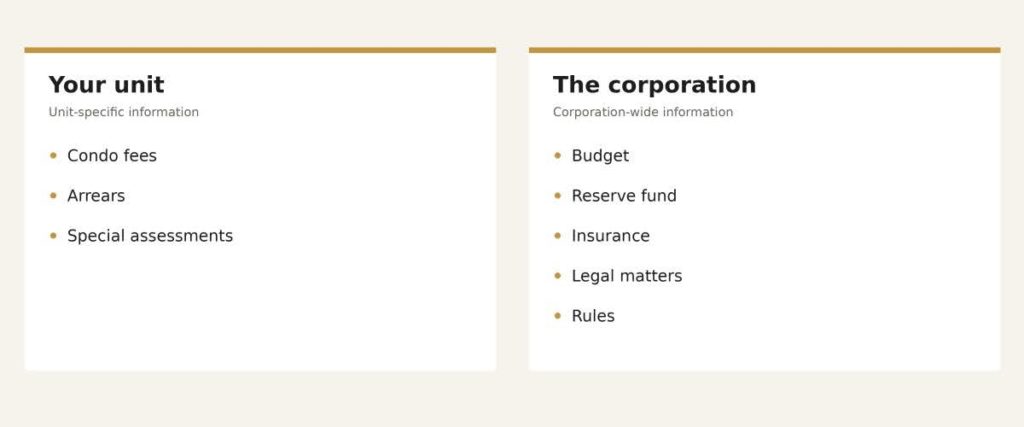
The package covers two layers: the unit you’re buying and the corporation you’ll be joining as an owner. Each layer answers a different question about what ownership will cost you.
Unit-Specific Fees, Arrears, and Assessments
This part is about your unit alone. The prescribed certificate form asks the corporation to state whether the owner is behind on common expenses, when the next payment is due, any prepaid amounts, and any increases or special assessments charged to the unit since the budget was set.
Compare these numbers with the listing and flag anything that needs an explanation:
- Monthly Common Expenses: Confirm the amount and which units it covers, since parking or locker fees may be listed separately.
- Arrears or Liens: If the seller owes the corporation money, ask your lawyer how it will be paid out on closing.
- Assessments and Expected Increases: The form also asks whether the corporation knows of anything likely to raise fees, so read that answer closely and ask who pays any assessment that lands before closing.
Corporation Finances and Governing Documents
The rest of the package describes the corporation as a whole. Expect a stack of corporate records that can include the budget, latest audited financial statements, and auditor’s report. Use this short checklist to confirm the main pieces are there:
- Budget and Audited Statements: The current year’s budget and the most recent audited financials.
- Reserve Fund Disclosure: The fund’s balance, details of the latest reserve fund study, and any planned increases to contributions.
- Insurance Certificates: Proof of the corporation’s current policies. The building’s coverage and your own condo insurance do different jobs, so share these with your broker.
- Legal Proceedings: Unpaid judgments against the corporation and any court, arbitration, or tribunal matters it’s involved in.
- Declaration, By-Laws, and Rules: Unit boundaries, how fees are shared, and rules on pets, leasing, renovations, and more.
- Agreements: Management contracts and, where relevant, shared facilities agreements with a neighbouring property.
Treat this as a completeness check. Whether the reserve fund is strong is a building-level question we come back to below.
Who Can Request It, What Does It Cost, and How Long Does It Take?
The rules here are short, but the timing decides how long your condition period needs to be.
Who Can Order the Certificate?
Ontario’s Condominium Act requires a corporation to issue a certificate to any person who requests it and pays the fee, so it isn’t limited to the owner. Sometimes the seller orders one before listing so buyers can review it early. Other times the buyer’s side orders it once an offer is accepted.
Either way, settle the details with your agent and lawyer upfront: who places the request, who pays, and where the package should be delivered. A certificate sitting in the wrong inbox eats into a deadline that’s already tight.
Standard Fee, Delivery Time, and Rush Requests
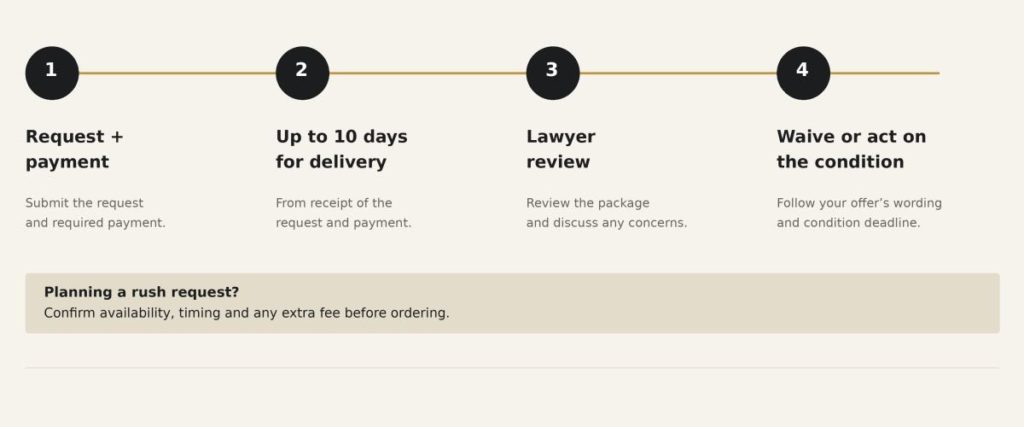
A corporation can charge up to $100, including taxes and materials, and has 10 days from receiving the request and payment to deliver the certificate. Some corporations offer faster service for a rush fee, but the Condominium Authority of Ontario (CAO) notes they must still offer the standard $100 option within 10 days.
Rush service is optional and mostly useful when no certificate was ordered ahead of time and your condition deadline is close.
If a corporation misses the 10-day deadline, the law treats it as having issued a “clean” certificate, which can protect a buyer from things like undisclosed arrears. That’s a backstop, not a plan. You still want the actual documents in hand before you firm up.
Where the Review Fits into Your Offer
For most resale condo buyers, the certificate review sits inside a condition in the Agreement of Purchase and Sale (APS). The condition gives your lawyer a set number of days to receive and review the package and spells out what happens if you aren’t satisfied. It’s the same structure behind what sold conditionally means on a listing: the deal exists, but it isn’t firm yet.
A few points to settle when your offer is drafted:
- Who Delivers the Documents: Note whether the seller will provide an existing certificate or the buyer will order a new one.
- How Long the Review Runs: Allow for the corporation’s delivery time plus a few days for your lawyer to read and report back, especially if no certificate exists yet.
- What the Condition Lets You Do: The exact wording, deadlines, and notice requirements in your APS decide your options, so ask your lawyer to walk you through them before you sign.
One misconception catches resale buyers off guard: there’s no automatic cooling-off period. The 10-day right to cancel under the Condominium Act applies to pre-construction purchases, not to a condo you buy from an existing owner. Without a review condition in your contract, the certificate on its own doesn’t give you a way out. Building that condition in is one of the steps worth mapping out early when you’re buying a home in Ontario.

What Your Lawyer Reviews and What You Should Ask
A status certificate isn’t a pass-or-fail form. It’s a set of disclosures your lawyer reads against your contract, the listing, and your plans for the unit, then explains in plain terms.
Check Completeness and Unit Details
The first pass is about whether the package is complete and describes the right property. Your lawyer will typically check:
- Legal Description: The unit, level, and any parking or locker units match what you agreed to buy.
- Attachments: Every document listed on the certificate is actually in the package.
- Dates: The certificate and its financial figures are recent enough for your closing timeline.
- Consistency: Fees, assessments, and disclosures line up across the certificate and its attachments.
Gaps and mismatches go back to the corporation or its manager for clarification, ideally while your condition is still open.
Understand the Practical Consequences Before Deciding
Once the package is complete, the useful conversation is about what each disclosure means for you. Ask your lawyer:
- Cost: Could anything here raise my monthly fees or lead to a special assessment?
- Use: Do the rules allow how I plan to live in or use the unit, including pets, leasing, or renovations?
- The Condition: Based on what’s disclosed, what are my options before the deadline, and what happens if I don’t act?
Your agent can help with the market side, such as how a fee increase compares with similar buildings, and an online checklist can help you prepare questions. Neither replaces legal advice on your specific contract and documents.
When a Certificate Raises Questions
A disclosure isn’t automatically a reason to walk away. Plenty of well-run buildings report a lawsuit, a recent fee increase, or a rule you didn’t expect. The detail behind each item is what counts, so treat these as points to investigate:
- Unbudgeted Costs: A planned special assessment or an expected fee increase changes your real cost of ownership. Ask what it’s for, what your share is, and when it’s due.
- Legal Issues: Ask what a lawsuit is about, whether the corporation is suing or being sued, and whether insurance is involved.
- Arrears: Unpaid fees from the seller are normally dealt with on closing, but your lawyer should confirm how.
- Use Restrictions: Rules on short-term rentals, pets, or renovations can matter more to your plans than any number in the budget.
The reserve fund deserves a quick look too. Ontario corporations must have their reserve fund study updated at least every three years. The certificate tells you when the last study was done and whether the board plans to raise contributions. Reading those answers in context is part of evaluating a condo building as a whole, alongside its age, upkeep, and management.
Before Waiving a Condition or Closing
Waiving the status certificate condition makes the deal firm on that point, so check that everyone has finished their part first:
- Your Lawyer: Has reviewed the full package and answered your questions.
- Your Agent: Has the waiver ready and knows the exact deadline and how notice must be given.
- Your Lender: If you’re financing, ask whether the lender needs a copy of the certificate or anything else about the condo before advancing the mortgage.
Between waiving and closing, things can change. A board can approve a special assessment, a new claim can be filed, or the budget can be revised. Ask your lawyer whether you need an updated certificate or other confirmation before closing. No single expiry date applies to every deal, and nothing guarantees the picture stays the same, so the answer depends on your timeline and your lender.
Buying a GTA Condo with a Clearer Document Trail
A condo status certificate in Ontario shows you the unit’s finances and the corporation’s health while you still have room to act. Ordered on time, read by your lawyer, and paired with the right questions, it turns a big unknown into a decision you can make with confidence.
Keep in mind that it applies to registered resale condos. If you’re buying from a builder before the corporation is registered, you’ll get a disclosure statement instead, and your questions shift toward construction timelines, the first-year budget, and the builder’s commitments. Weighing older versus newer condos is a good place to start if you haven’t settled on which kind suits you.
Big City Realty can help you plan your offer, set realistic condition timelines, and keep documents moving between you, your lawyer, and your lender while the clock runs. Legal review stays with your lawyer, and we make sure they get what they need in time. Book a condo buying consultation to talk through the building you have in mind.

Frequently Asked Questions
1. Do parking and locker spaces always use the same status certificate as the residential unit?
Not always. Parking and lockers can be part of your unit, separate legal units, or common elements you’re only given the right to use, and each setup is documented differently. Ask your lawyer to confirm what you’re actually buying and whether every legal unit is covered by the certificate you received.
2. Does a freehold townhouse always have no condo documents?
No. Some freehold townhouses sit on a parcel of tied land attached to a common elements condominium, which covers shared features such as a private road, and owners pay monthly fees toward them. If you’re comparing freehold versus condo townhouses, have your lawyer check the title and confirm whether a status certificate applies to that property.
3. Can I use another unit’s status certificate to assess the unit I want?
Only as background. A neighbour’s certificate may share the same budget and reserve fund details, but it won’t show the arrears, fees, assessments, or legal description for your unit. Order the certificate for the exact unit you’re buying, along with any parking or locker units that come with it.